AI Server PCB Prototyping: Why Layer Count Comes First
Ask any factory to quote an AI server PCB assembly and the first question is never price — it is layer count. Layers determine the laminate, the stack-up, the cost structure and the lead time. Get these five numbers right before you send an RFQ and the whole conversation moves faster.
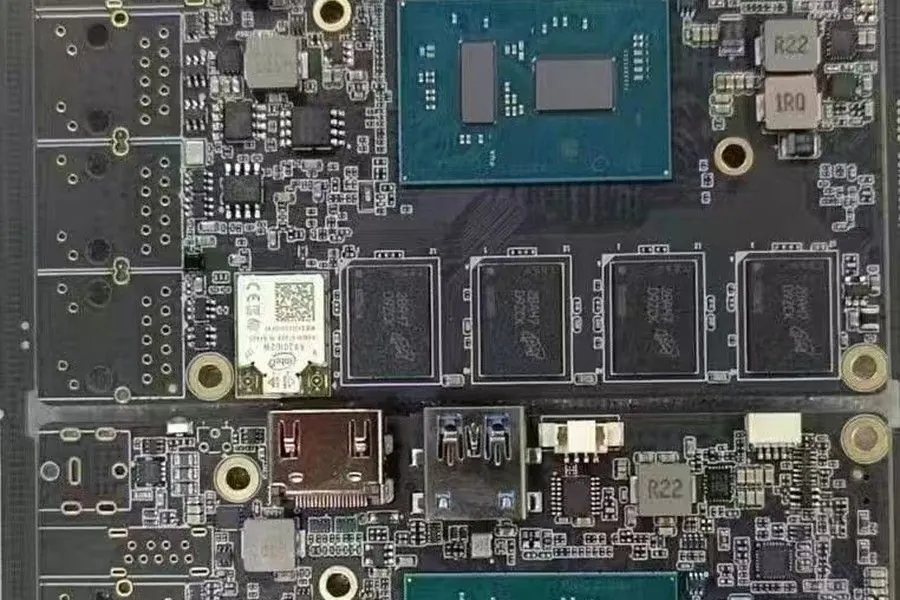
UBB and OAM accelerator boards in the AI server industry typically run 20+ layers; high-speed switch and storage boards usually sit in the teens. At that density, the default assumptions that work for ordinary boards stop applying — which is exactly why layer count comes first.
What the factory is really confirming when it asks about layers
- Stack-up structure — core and prepreg count, finished thickness (AI compute boards commonly exceed 2.0 mm, subject to engineering review);
- Laminate grade — standard FR-4 versus high-Tg / low-loss material, which directly drives cost;
- Lamination cycles — high layer counts often need two or more pressing cycles, which is where cycle time and yield risk live;
- Hole size and trace width/spacing — as layers go up, holes get smaller and traces finer, stressing drilling, plating and etching.
Once these four are pinned down, the factory can honestly say whether its process can hold the board — instead of saying yes first and failing later.
How layer count moves your quote and lead time
As layers rise, laminate takes a bigger share of the quote, and lamination, drilling and plating all run longer. Industry rule of thumb: standard-complexity prototypes in 3–5 days, 20+ layer boards in 7–10 days or more (subject to material and stack-up review).
So the true lead time of an AI server PCBA prototype usually hangs on PCB fabrication and specialty material sourcing, not on placement itself — 12 SMT lines absorb the scheduling. Ask "when will bare boards arrive and when will components be complete" instead of just "how fast can you ship".
Stack-up pitfalls at prototype stage
The classic failure: impedance calculated on stack-up A, boards built on stack-up B — high-speed signals expose it the first time you test. Two actions prevent it:
- Send Gerbers with a written stack-up requirement: layer count, copper weight per layer, dielectric thickness, impedance targets — attached to the order;
- Require the fabricator to return a stack-up drawing and confirm it layer by layer before stencils are cut.
Here is a question you can put to any supplier: quote item by item against six fields — layer count, board thickness, material grade, copper weight, surface finish, impedance control — and attach the stack-up drawing. If any one answer is vague, that is where volume production will disagree with you.
ENIG or OSP for high-speed boards?
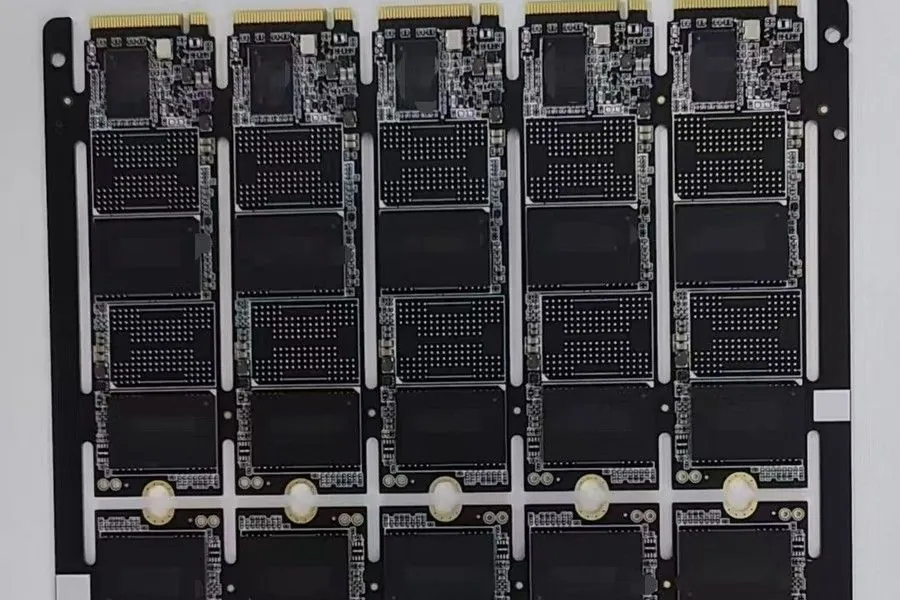
High-speed and card-edge designs mostly choose ENIG: flat surface, compatible with fine-pitch BGA and gold fingers, tolerant of multiple reflow cycles. OSP is cheaper but does not survive multiple reflows and cannot handle gold fingers. Industry-typical ENIG plating is Ni 3–6 μm, Au 0.05–0.15 μm (subject to process review). On AI server boards, black solder mask is increasingly common — its exposure accuracy and cosmetic acceptance are stricter than green oil, so agree on the inspection standard at prototype stage, not at volume.
Certification and traceability for compute boards
Compute customers are not forced into IATF 16949 like automotive, but quality systems and traceability are still hard gates: ISO 9001 is the baseline, and the question is how deep traceability goes — batch or single board. During an audit, ask the supplier to pull one board's loading, printing, placement, reflow and inspection records from MES on the spot. A factory whose single-board history is complete at prototype stage will keep it complete at volume. Boruitong holds IATF 16949 and ISO 13485 alongside ISO 9001, and the same traceability discipline that automotive and medical orders require applies to our AI server and compute PCBA production.
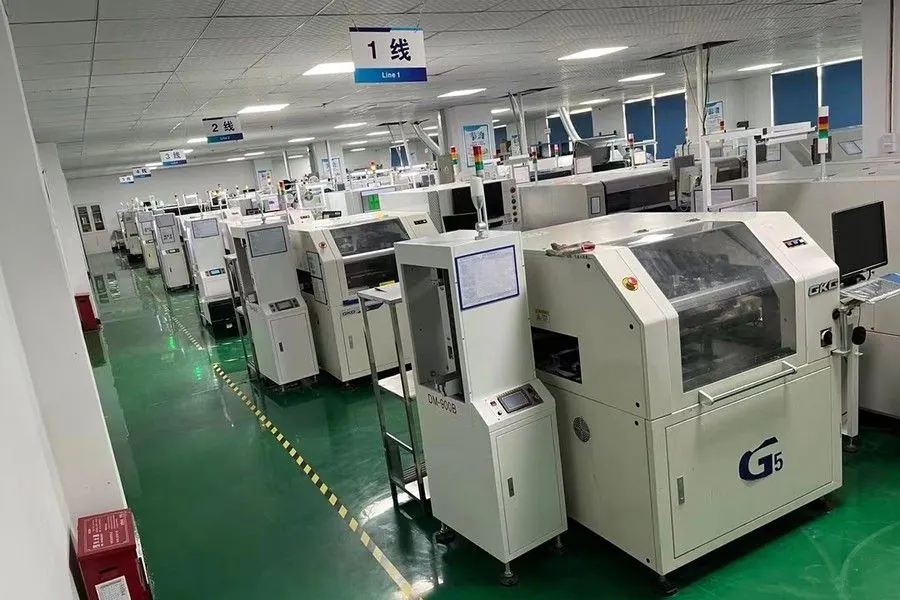
See the full line configuration on our capability and equipment page, or read how we handle quality and MES traceability.
Need an AI server or compute board prototyped? Contact sales lead Shuangxin Li on WhatsApp: +86 136 8258 5455 or [email protected]. Send Gerber + BOM — our engineers run a DFM review first, and you get an executable quote within 24 hours. Factory audits and remote document reviews welcome.